Compression vs Regular Packing Cubes: Which Should You Buy?

You bought packing cubes, and now the store page is asking you to decide again: regular or compression. The photos look nearly identical, six colored pouches in a mesh bag, a few dollars apart in price. But that second zipper on the compression version changes what the cube does to your clothes, and picking wrong means paying for a feature you never use.

What the Second Zipper Actually Does
Regular cubes have one zipper. You fold or roll your clothes, zip the cube shut, and it holds them as a tidy block. Nothing about the volume changes; the cube is just a container.
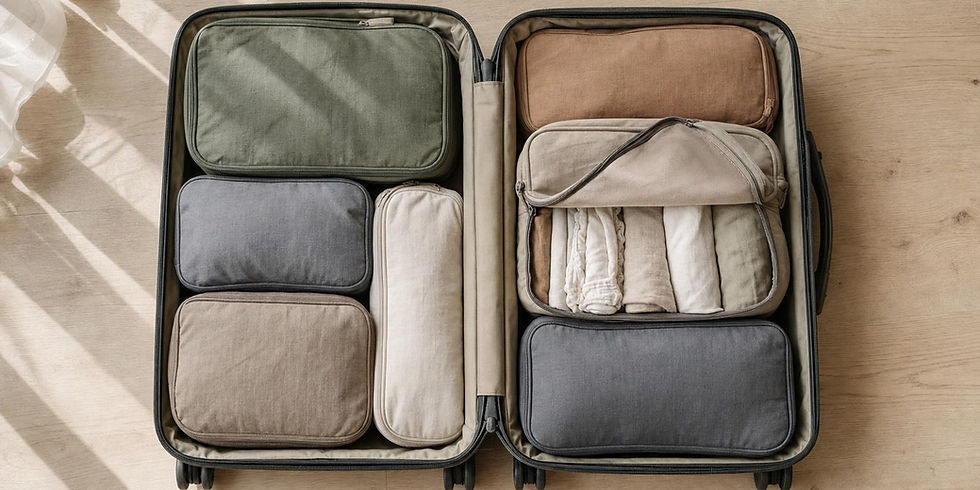
Compression cubes add a second zipper, usually running around three sides once the first one is closed. Pulling it does not vacuum-seal anything the way a vacuum bag does. It physically folds the cube's excess fabric inward and forces trapped air out through the seams, flattening a puffy block into a thinner slab. A full cube can lose close to a third of its original height this way, sometimes more if what's inside was mostly loft and air to start.
If you're still deciding whether cubes are worth owning at all, our honest look at whether packing cubes are worth it covers that question first. This one assumes you've already decided yes.
When Compression Actually Earns Its Keep
Compression works when the problem is soft, squeezable clothing that traps air: cotton t-shirts, fleece layers, sweatpants, a rolled hoodie. These compress well because there's real empty space between the fibers, and pushing that air out shrinks them noticeably. That matters most if you fly carry-on only and your limit is a sizer box, not a scale.
It also pays off mid-trip. Laundry that filled a cube loosely on day one can get squeezed flatter to make room for souvenirs on the way home, a real save on a two-week trip with no chance to do a wash. The system behind organizing which cube holds what is worth getting right first, and we cover it in how to actually use packing cubes.
When It Does Nothing, or Actively Hurts
Compression has limits, and ignoring them costs you wrinkles or a jammed zipper.
Fabrics that don't benefit:
Linen and silk, which crease under pressure in ways an iron struggles to fix
A blazer or dress shirt you need presentable on arrival
Anything already structured, like a packed toiletry pouch with rigid bottles
A suitcase already packed tight also has nothing left to give. Compression only removes air, and a bag stuffed to its limit before you close the second zipper has no reserve to squeeze out. You'll fight the slider for a few extra millimeters and gain nothing worth the effort.
The Weight Paradox
Here's the part the packaging never mentions: compression saves space, not weight. Squeezing the air out of a wool sweater doesn't remove any wool. The sweater weighs exactly the same folded flat as it did puffed up. Air simply has no mass worth measuring.
That distinction matters if your real problem is a checked bag creeping toward its kilo limit, or a budget airline that weighs carry-ons at the gate. Compression cubes let you cram more clothes into the same shape, which for a weight-limited bag just means it's easier to overpack, not lighter. If your airline counts kilos rather than liters, buying compression cubes solves a problem you don't actually have. For the weight side of packing, see how to pack a suitcase.
The Second Zipper Is Also the Weak Point
That extra zipper works harder than any other seam on the cube. Every closure pulls it under tension against resistance from tightly packed fabric, a rougher job than the first zipper ever does. Reviews of compression cubes mention split seams and stuck sliders more often than reviews of the plain version, and once that zipper fails, you're left with a regular cube and a dead second pocket. Cheap compression cubes tend to fail faster than cheap regular ones for the simple reason that they carry twice the hardware that can break.
Which One Should You Actually Buy
Buy compression if:
You travel carry-on only and your limit is a sizer box, not a scale
Most of what you pack is soft and squeezable: t-shirts, fleece, workout gear
You want spare room mid-trip for laundry or souvenirs without checking a second bag
Buy regular if:
Your airline weighs the bag and kilos are your tight limit, not liters
You're packing anything structured or wrinkle-prone: blazers, silk, linen
You want the simplest, most durable option and don't need the extra squeeze
A set of compression packing cubes earns its slightly higher price if you tick most of the compression boxes above. If you land mostly in the regular column, save the money; the zipper you're not buying is one that can't fail on you at hour two of a trip.
Test one cheap set before committing to a full wardrobe of either type. Checked-bag travelers fighting a weight limit should buy regular and stop there. Carry-on-only travelers fighting a sizer box get a genuine upgrade from compression, not a marketing trick.
As an Amazon Associate, ThingsToPack earns from qualifying purchases made through some links in this article.


Comments