How to Choose a Carry-On Backpack You Will Not Regret

Nobody regrets a carry-on backpack in the store. You regret it three weeks later, digging through the top of a stuffed bag at 11 pm because your toothbrush settled to the bottom. The good news: the difference between a bag you love and a bag you resell is not the brand. It comes down to a handful of criteria you can check before you buy, especially if you are trying one-bag travel for the first time.

Start with the opening, not the looks
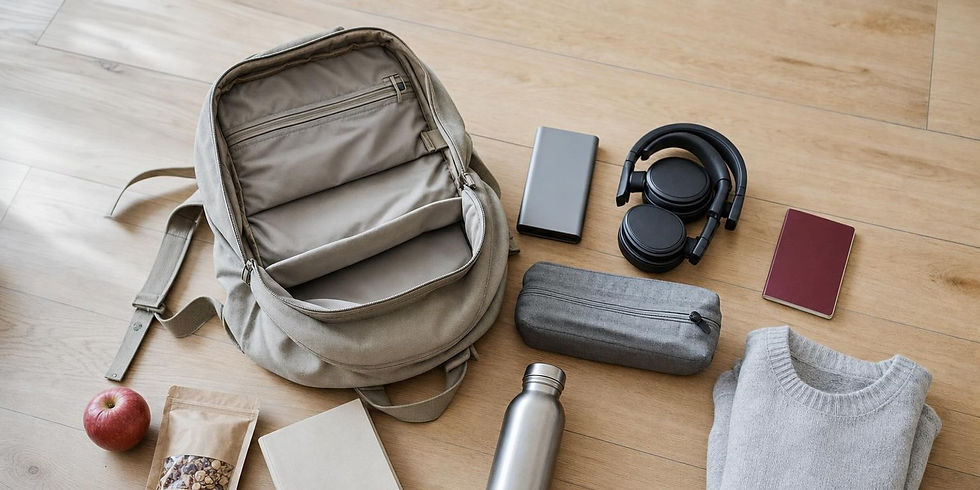
This is the single biggest difference between a hiking backpack and a travel backpack. Hiking bags load from the top. Travel bags open flat like a suitcase, a design usually called clamshell.
A toploader forces you to unpack everything above the thing you want. A clamshell lets you unzip the whole front panel, see everything at once, and pull out one item without disturbing the rest. Living out of a toploader for a week is archaeology. Living out of a clamshell is just opening a drawer.
If a bag only opens from the top, stop reading its other features. For travel, it already failed.
Be honest about size
The ceiling for a carry-on backpack is 40 to 45 liters. Beyond that you are in checked-luggage territory, no matter what the product page says. A generic 40 liter carry-on travel backpack (paid link) is the sweet spot for most people: big enough for a week or more with the right packing, small enough that most gate agents wave it through.
Two warnings from experience. First, airline size limits vary, and budget carriers measure with sizing frames and enthusiasm. Check the exact dimensions of the airlines you actually fly. Second, do not trust the manufacturer's numbers. Measure the bag yourself once it arrives, packed, because soft bags bulge past their listed dimensions the moment you fill them.
Check the empty weight
Every gram the bag weighs is a gram of stuff you cannot bring. That matters most on airlines that weigh cabin bags, where limits of 7 to 10 kg are common. A bag that weighs 2.5 kg empty eats a third of a 7 kg allowance before you pack a single sock.
Aim for under 1.5 kg empty at 40 liters. Bags in that range exist without feeling flimsy. Heavier usually means more frames, more padding, and more pockets than a one-week trip needs.
Comfort rules you only learn the hard way
Padded shoulder straps are the minimum, not a feature. What actually matters:
A real hip belt if you carry 8 kg or more. A hip belt moves weight from your shoulders to your hips, and past that threshold your shoulders will send complaints by day two. Below 8 kg, a simple sternum strap is enough.
Stowable straps. If straps and hip belt can zip away behind a panel, the bag survives gate checks and luggage belts without a strap getting caught and torn. This sounds minor until it happens to yours.
A back panel that does not soak you. Some airflow channel or mesh helps, but do not expect miracles. Every backpack makes your back sweat in July.
Comfort claims on product pages mean nothing. Weight distribution does, which is why the at-home test at the end of this article matters more than any review.
Organization: fewer compartments than you think
The best interior layout is boring: one big main compartment plus packing cubes. Cubes give you flexible organization that changes per trip. Built-in dividers and ten small pockets give you a fixed layout that fits one specific packing style, usually not yours, and adds weight. The same cube logic runs through The Ultimate Packing List if you want to see it applied.
The one built-in feature worth insisting on: a laptop compartment you can reach from outside. At security you want the laptop out in five seconds, not after opening the main compartment on a metal table while the queue watches. Suspended padding, so the laptop does not sit on the floor of the bag, is a bonus.
A small top or front pocket for the things you grab constantly is useful too. Everything beyond that, treat with suspicion. And keep in mind that your backpack does not have to do everything: in-flight items belong in your personal item under the seat, not in the overhead bin.
Materials and zippers
You do not need exotic fabrics. Any decent nylon or polyester around 400 denier or more will outlast years of trips. What actually fails on cheap bags is the zippers. Look for YKK zippers, which have become the generic mark of a manufacturer that did not cut corners; if a company saved money there, assume it saved money everywhere you cannot see.
Water resistance is nice, waterproofing is marketing. You will walk from taxi to door, not swim. A rain cover or a plastic bag inside handles the rare downpour.
Features that are mostly marketing
Anti-theft everything. Locking zippers, slash-proof panels, hidden pockets. Real thieves take the whole bag or pick easier targets. Basic awareness beats hardware.
A forest of compression straps. Two are useful. Six are weight, dangling ends, and something for the airport belt to grab.
Built-in USB ports. A cable running through the bag to a power bank you still have to buy. Just carry the power bank.
Dedicated shoe compartments. A fixed garage for shoes you may not bring. A cheap shoe bag does the same job and disappears when empty.
The only test that counts
Do this before the return window closes. Pack the bag completely, with your real gear for a real trip, and wear it around the house or the block for a full hour. Not five minutes. An hour.
Comfort problems hide in the first fifteen minutes and show up after forty. If your shoulders ache, if the bag pulls backward, if the hip belt sits on your stomach instead of your hips, send it back without guilt. That is what the return policy is for, and it is a far cheaper lesson at home than in an airport.
Pick the opening style first, be strict about size and empty weight, then let the one-hour test make the final call. Your future self, unpacking in ninety seconds at some hotel, will be quietly grateful.
As an Amazon Associate, ThingsToPack earns from qualifying purchases made through some links in this article.


Comments