The One-Bag Travel Packing List

Watch the baggage carousel at any airport and you will see it: people wrestling suitcases they packed for a trip that never happened. The rain jacket for the week it did not rain. Four pairs of shoes for two feet. One-bag travel is the opposite bet. You pack a single carry-on backpack, walk past the carousel, and never think about your luggage again.

Here is the full list, plus the system that makes it work. And, just as important, when it does not.
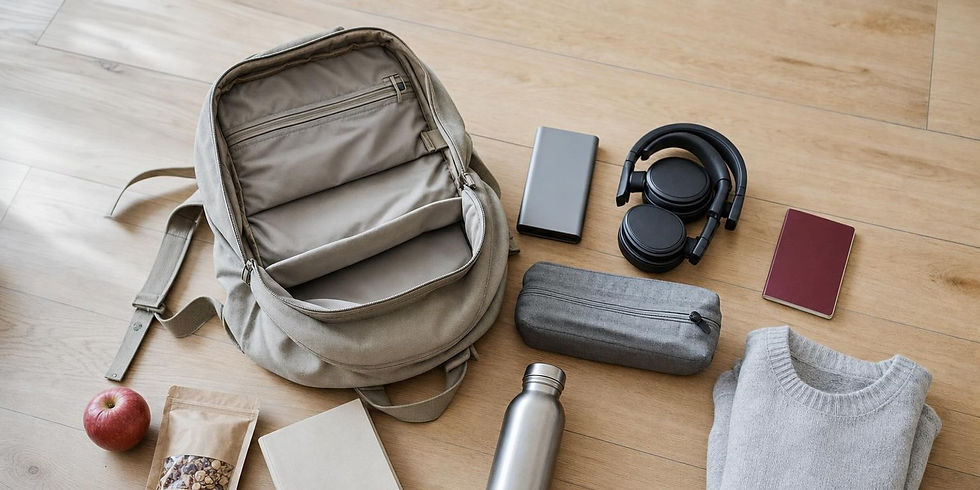
The bag: 40 liters, worn on your back
The magic number is around 40 liters. That is roughly the maximum most airlines accept as a carry-on, and conveniently it is also about the most weight you want on your back through a city in July. Shape matters as much as size: a bag that opens flat like a suitcase beats a top-loading hiking pack, because you want to see everything at once, not excavate.
Two features matter more than any other in a 40-liter carry-on travel backpack (paid link): a clamshell opening and a real hip belt, or at least solid shoulder straps. Everything else, from laptop sleeves to hidden pockets, is nice but negotiable.
If you are used to packing big, read this list next to The Ultimate Packing List, which is the maximal version of the same trip. The gap between the two lists is everything you have been carrying for free.
The 3-outfit principle
The entire system rests on one idea: wear one, pack one, wash one. You own three of everything that touches your skin. One outfit is on your body, one is clean in the bag, one is drying from last night's wash. That is enough clothing for a trip of any length, because laundry replaces volume.
This only works if you actually do the washing. Skip two nights in a row and the math collapses. But the routine takes ten minutes and becomes automatic by day three.
The clothing list
Tops and bottoms
3 t-shirts, merino wool if the budget allows
1 long-sleeve shirt or light merino sweater
2 pairs of pants or one pants plus one shorts, depending on climate
3 pairs of underwear, quick-dry or merino
3 pairs of socks, merino again
1 packable rain shell that stuffs into its own pocket
Sleepwear only if a t-shirt from the rotation will not do
Why merino instead of cotton
Merino is the fabric that makes three shirts feel like seven. It resists odor, so you can wear a shirt twice before washing. It dries overnight on a hanger, which cotton reliably fails to do. And it works in heat and cold alike. Yes, it costs more. Spread over a hundred travel days, it is the cheapest gear you own.
Cotton does the opposite of all of that. A cotton t-shirt washed in a sink at 10 p.m. is still damp at 8 a.m., and now you are packing wet laundry. One damp cotton shirt can sour a whole bag.
The shoe question
One pair, maximum two. Shoes are the heaviest, bulkiest, least compressible thing you carry, so this is where trips are won or lost. The default: one pair of comfortable sneakers you can walk 20 kilometers in, worn on the plane, never packed. If the trip truly demands a second pair, sandals for beach destinations or flats that pack completely flat, they ride inside a shoe bag at the bottom.
Three pairs is not one-bag travel. It is regular travel with a smaller suitcase.
Toiletries: everything under 100ml
Since the bag never gets checked, every liquid must clear security. That constraint is a feature. It forces the kit down to what you use daily:
Toothbrush and travel toothpaste
Deodorant, solid if possible, since solids skip the liquids bag entirely
One multi-purpose soap or shampoo bar
Razor
Sunscreen in a 100ml bottle, refilled at the destination if needed
Any medication, in original packaging
A small pack of laundry detergent sheets or travel wash
Everything else, from full-size shampoo to the backup of the backup, exists at your destination. Pharmacies are global. More small-kit tricks like this live in our packing hacks for a weekend getaway, and most of them scale up to long trips.
The sink washing routine
This is the habit that replaces four kilos of clothes. Every evening, or every second evening with merino:
Plug the hotel sink, or use a dry bag as a portable washing machine
Warm water, a little travel detergent or shampoo, three minutes of agitating
Rinse, then press the water out. Never wring merino
Roll the item in a towel and stand on it for thirty seconds
Hang it over the shower rail or on a hanger by the window
The towel roll is the step people skip and should not. It pulls out most of the remaining water, and it is the difference between dry-by-morning and damp-by-morning. A meter of travel clothesline weighs nothing and turns any bathroom into a laundry room.
Electronics: the minimal set
Phone, which is also your camera, guidebook, boarding pass and alarm clock
One charger and one cable, ideally a dual-port charger so phone and power bank share it
A small power bank
One plug adapter for the destination
Headphones
Laptop or tablet only if the trip genuinely requires it, not "just in case"
The laptop question deserves honesty. If you will not work, leave it. It is the single heaviest optional item in most bags. Whatever electronics make the cut travel in your personal item, not the backpack; our guide on what to pack in your under-seat bag covers that split in detail.
What gets cut
One-bag packing is mostly subtraction. The stuff that stays home follows a pattern: it exists for a scenario, not for the trip. The "nice restaurant" outfit for a trip with no reservation. The third book. The full first-aid kit for a city with pharmacies on every corner. The umbrella and the rain jacket, when one of them would do.
The test for every item: will I use this on a normal day of this trip? "Might need it" fails the test. Anything you might need, you can buy where you are, usually for less than the cost of hauling it.
Where one bag honestly breaks down
The method has real limits, and pretending otherwise helps nobody.
Winter. A parka, boots and sweaters eat 40 liters before you pack a single shirt. Cold destinations can work one-bag if you wear the bulk on travel days, but a ski trip or a January week in Helsinki is a stretch. Doable for the experienced, miserable for the first-timer.
Business trips. A suit does not sink-wash, and dress shoes do not compress. If the trip includes meetings that require pressed clothing, either add a garment bag or accept that this is not a one-bag trip.
Families. One bag per capable adult works. One adult carrying for two small children does not. Kids' gear, from diapers to the stuffed animal that cannot be left behind, follows its own rules, and that is fine.
For everything else, city trips, beach weeks, months of mixed-climate wandering, the system holds surprisingly well.
Try it on a low-stakes trip first: three or four days, somewhere warm. Pack the list above, do the sink wash once, and see how it feels to walk out of the airport while the carousel is still spinning. Most people who try it once never check a bag again.
As an Amazon Associate, ThingsToPack earns from qualifying purchases made through some links in this article.


Comments