Oktoberfest Packing List: What to Wear and Bring

Every year, the same scene plays out at the entrances to the Theresienwiese: someone arrives with a daypack, gets stopped by security, and has to choose between the bag storage queue and going home. Oktoberfest has a strict bag rule, and it catches more visitors than the beer prices do. Packing for the Wiesn is easy once you know it. You need less than you think.
The bag rule comes first
This is the one rule that can wreck your day, so plan around it. Only small bags are allowed onto the festival grounds: roughly 3 liters, about 20 x 15 x 10 cm. Backpacks, daypacks and anything larger get turned away at the gate. There are paid storage points near the entrances, but the queues get long, and standing in one while your friends walk in is a miserable start.
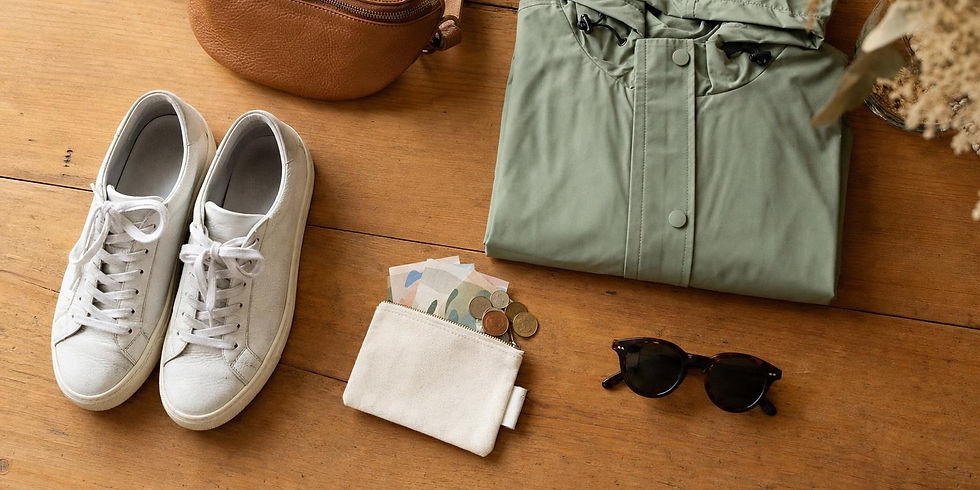
The fix is simple. Wear a belt bag or a small crossbody, something like a belt bag made for festivals (paid link) that sits flat against your body. It holds everything you actually need for a day at the Wiesn: phone, cash, ID, lip balm. Bonus: in a packed beer tent, a bag you wear on your front is much harder to pickpocket than anything on your back.
What goes in it:
Phone
Cash (more on that below)
ID or a copy of your passport
One card as backup
Lip balm and a few tissues
A slim power bank if you are staying into the evening
That is the whole bag. If it does not fit, it stays at the hotel.
How much cash do you need?
More than you expect, because the Wiesn still runs on cash. Some tents and stalls now take cards, but plenty do not, and you do not want to discover which kind yours is when the server is standing at your table with six full liters. Servers are paid on the spot, in cash, round by round.
A liter of beer (a Mass) plus tip lands somewhere north of 15 euros, and prices creep up every year. Add food and a ride or two, and 80 to 100 euros per person is a realistic day budget. Tipping matters here: servers carry ten full glasses through a crowd for you, and rounding up generously is the local standard.
There are ATMs on the grounds, but they charge fees and collect queues. Get your cash in the city beforehand.
Do you need Tracht?
Honest answer: no. Nobody checks, nobody cares, and you will see plenty of people in jeans having exactly as much fun. If you do not want to spend 100 euros or more on an outfit for one day, skip it and put the money into food and beer.
That said, most visitors do wear Tracht, and if you want to join in, a few things are worth knowing:
Dirndl bow placement means something. Bow tied on your right: taken. Bow on your left: single. Locals really do glance at it.
Cheap Lederhosen look cheap. The polyester versions from souvenir shops photograph badly and feel worse after eight hours on a bench. Real leather costs more but lasts decades; secondhand shops in Munich sell good used pairs for less than a bad new one.
A checked shirt and jeans is a fine middle ground. You blend in without the investment.
Whatever you wear, make sure you can sit, climb onto a bench and dance on it. That is not a joke. You will be standing on one by 4 pm.
Shoes: closed, comfortable, sacrificial
This is the most underrated item on the list. A Wiesn day means hours of standing, walking on gravel, climbing over benches and, late in the evening, broken glass on the floor. Sandals and new white sneakers are both mistakes, just different ones.
Wear closed shoes you have already broken in and do not mind ruining. Beer will be spilled on them. Leather boots, worn-in sneakers or anything sturdy with grip works. Heels sink into the gravel between the tents; if you want height with a Dirndl, block heels survive, stilettos do not.
Dress for September weather
The festival runs from mid September to the first Sunday in October, and Munich weather in those weeks is genuinely unpredictable. You can get 25 degrees and sunshine, or 8 degrees and steady drizzle, sometimes in the same week. Inside a full tent it is always warm, bordering on tropical. Outside, after sunset, it gets cold fast.
Layers solve this. A t-shirt or your Tracht as the base, a sweater or cardigan you can tie around your waist, and a light rain jacket if the forecast looks wet. Skip the umbrella: it does not fit in your tiny bag, it is useless in a crowd, and you will lose it in the tent anyway. A jacket with a hood does the same job hands-free.
What stays at home
Any backpack or large bag. See rule one. This includes camera bags.
Your laptop, tablet, and anything valuable you would be sad to lose in a crowd of six million visitors.
The charger. A power bank covers the day; wall chargers are hotel items.
Glass bottles and your own drinks. Security takes them, and the tents exist for a reason.
More cards than you need. One card plus cash. A stolen wallet with one card in it is an annoyance, not a crisis.
Getting there without regrets
Do not even think about driving. There is no parking, the streets around the Theresienwiese close, and you will be drinking. Munich's U-Bahn drops you almost at the entrance (Theresienwiese station on the U4/U5), and trains run late. If you are flying in, our comparison of all the ways from Munich Airport to Hauptbahnhof saves you the guesswork on arrival day.
If you have a spare day before or after the festival, Munich rewards it. Start with these 10 things worth doing in Munich, and if you want to see something you will not find anywhere else, watch the surfers at the Eisbach river wave in the English Garden. Ten minutes from the center, and free.
Pack the belt bag tonight, break in your shoes this week, and get your cash before you head to the grounds. Everything else about the Wiesn sorts itself out once you are sitting on a bench with a Mass in front of you.
As an Amazon Associate, ThingsToPack earns from qualifying purchases made through some links in this article.


Comments